
Since 2006
Welcome to CHINA SINOTRUCK(HK) LIMITED !










How to check twist lock alignment on a flatbed container trailer
Misaligned twist locks can prevent a container from seating securely, increasing the risk of load movement and delays. For quality control and safety personnel, checking twist lock alignment on a flatbed container trailer is an essential step before loading and dispatch.
A reliable inspection checks both geometry and function: the locks must match the intended container positions, allow the corner castings to seat fully, and engage correctly. This guide explains how to identify defects, record findings, and decide when a trailer should be held for repair.
What does correct twist lock alignment look like?
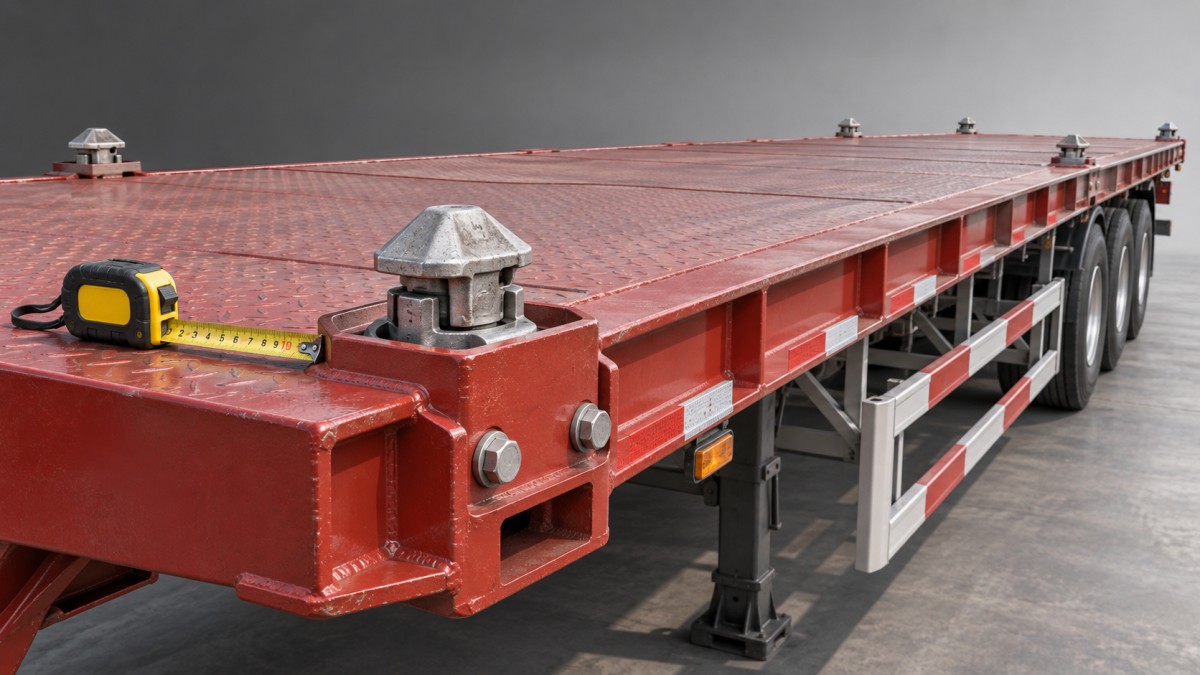
Correct alignment means each required twist lock is positioned to enter its corresponding container corner casting without forcing the container or the locking mechanism.
When the container is lowered, its supporting corner castings should sit properly on the trailer’s designated bearing surfaces. Each lock should then reach its specified locked position.
Visual alignment alone is insufficient. A lock can appear centered but fail to engage because its head, stem, guide, or mounting structure is damaged.
Inspect the complete restraint arrangement specified for the container and trailer. The number and location of required locks depend on the equipment configuration and applicable transport rules.
Prepare the trailer and confirm the container configuration
Park on firm, level ground, secure the trailer against movement, and follow site procedures for uncoupling or stabilizing it. Keep personnel clear of suspended loads.
Identify the container size, intended loading position, and designated lock locations. Some trailers accommodate more than one container length or combination using different lock positions.
Use the trailer manufacturer’s drawings, lock instructions, and applicable inspection criteria as the primary reference. Do not assume every visible lock is intended for every configuration.
Gather a tape measure, straightedge, flashlight, and inspection form. A calibrated measuring device and a suitable reference jig can improve consistency where tighter checks are required.
Before measuring, remove debris that could obscure bearing surfaces or interfere with lock movement. Follow site procedures for isolating defective equipment during inspection.
How to check lock positions and mounting points
Start at one end of the trailer and identify each lock required for the planned container position. Mark or record the locations to avoid overlooking one.
Look for bent lock heads, distorted stems, cracked welds, loose fasteners, damaged housings, and corrosion around mounting points. Check the surrounding crossmembers and supports for distortion.
Compare the positions of corresponding locks on both sides. Measure between relevant lock reference points and compare the results with the manufacturer’s drawings and permitted tolerances.
Where the manufacturer specifies diagonal measurements or a checking jig, use them to assess whether the lock pattern is square. Record the reference points and readings.
Check the height and condition of the designated bearing surfaces. Damaged or uneven supports can prevent full seating even when horizontal lock spacing appears correct.
Do not apply a universal spacing tolerance or judge alignment solely by eye. The acceptable dimensions depend on the trailer, lock design, and inspection specification.
Verify seating and engagement with a container
When a suitable container and lifting equipment are available, use a controlled loading check to confirm that the inspected lock pattern works with the intended container.
Before lowering, inspect the container’s relevant corner castings for damage, contamination, or deformation. A defective casting can prevent engagement even when the trailer locks are correctly positioned.
With a trained operator and an agreed signal system, lower the container slowly. Keep everyone outside the drop zone and away from pinch points.
Check that the castings enter over the intended locks without forcing them sideways. Confirm that the designated casting bearing surfaces are fully seated on their supports.
Operate each required lock according to its manufacturer’s instructions. Verify the specified locked position using the available handle, indicator, or other approved confirmation method.
If access permits, inspect the engagement from the appropriate viewing point. Do not rely on a handle’s appearance alone when the lock instructions require another verification.
Never place any part of the body beneath a suspended container. If the check cannot be completed safely, stop and use an approved inspection method.
Which defects require the trailer to be held?
Hold the trailer when a required lock will not enter its casting, cannot reach or retain its locked position, or shows damage outside the manufacturer’s limits.
Also stop the inspection if a casting does not seat properly, a mount is cracked or loose, or measurements fall outside the specified tolerance.
Do not compensate by hammering a lock, forcing a container into position, or accepting partial engagement. These actions can conceal damage and compromise restraint.
Tag the affected equipment, document the location and defect, and refer it to an authorized repairer. Welding, replacement, and adjustment should follow the equipment manufacturer’s procedures.
After repair, repeat the relevant dimensional, functional, and seating checks before returning the trailer to service. Record who authorized its release and when.
Make inspection records useful for quality and safety teams
A practical checklist should capture the trailer identification, container configuration, inspection date, lock locations, measured values, and the reference drawing or tolerance used.
Record functional results for each required lock, including seating and engagement where checked. Add photographs of defects and note whether the trailer was released or held.
Track recurring failures by location and defect type. Repeated damage at the same mounting point may justify closer review of loading practices, maintenance, or structural condition.
For mixed fleets, equipment specifications also matter beyond container trailers. The 3-Axle 45CBM Bulk Cement Tanker Trailer serves dry powder transport, with an air compressor and fluidized bed system for unloading.
Its specifications can be customized for cargo, road conditions, and operating requirements. Inspection criteria for that equipment should reflect its own design and service instructions.
Final check before dispatch
A flatbed container trailer is ready for dispatch only when the required locks and supports meet the applicable criteria, the container is properly seated, and engagement is verified.
Combine measurements, functional checks, and clear records to make that decision consistently. When any required result is uncertain or defective, hold the equipment until it is assessed and cleared.
Related Posts
- ▶ Is a flatbed container trailer suitable for non-container cargo?
- ▶ What causes uneven tire wear on a flatbed container trailer?
- ▶ When does a flatbed container trailer need a reinforced deck?
- ▶ How to check twist lock alignment on a flatbed container trailer
- ▶ Can a flatbed container trailer carry a 40-foot container?
- ▶ 14m 3-Axle Gooseneck Lowbed Trailer for Nigeria: Meeting Real Heavy Equipment Transport Needs
- ▶ Conquer Africa's Rugged Terrain: 14m 3-Axle Gooseneck Low Bed Trailer, the Ultimate 40-Ton Heavy Machinery Transport Solution
- ▶ Sizing a 60,000L Gooseneck Fuel Tanker for Multi-Stop Station Deliveries
- ▶ Slow Unloading on a 60,000L Gooseneck Fuel Tanker: Diagnostic Checks
- ▶ Aluminum or Steel for a 60,000L Gooseneck Fuel Tanker?
CONTACT US

Established in 2006, CHINA SINOTRUCK(HK) LIMITED Trailer supplies different types of products and provides relevant technical support and services to foreign customers.
Get in Touch
*We respect your confidentiality and all information are protected.