
Since 2006
Welcome to CHINA SINOTRUCK(HK) LIMITED !










Does a lighter flatbed container trailer increase usable payload?
Does a lighter flatbed container trailer increase usable payload?
A lighter flatbed container trailer can increase usable payload, but the gain depends on more than tare weight alone. Gross combination weight limits, axle loads, tractor weight, container weight and local regulations all affect how much cargo can be carried legally. The question is whether weight savings are achieved without compromising structural strength, durability or compliance.
For a purchasing decision, the useful comparison is not simply the advertised weight of two trailers. It is the additional cargo that a particular tractor, trailer and container combination can carry on the intended route—and the cost of obtaining that capacity over the equipment’s working life.
Where does the extra payload come from?
If a combination is limited by its permitted gross weight, reducing the trailer’s tare weight creates room for additional load. For example, if two otherwise equivalent trailers differ in verified operating weight by 500 kg, the lighter trailer could theoretically accommodate up to 500 kg more cargo. That assumes no other limit is reached and that the lighter trailer remains suitable for the load.
The operating calculation should start with the allowed combination weight and subtract the actual weight of the tractor, trailer, fuel, driver, container and any equipment carried. The remainder is a starting point for cargo weight, not an automatic legal allowance. Axle and axle-group limits, component ratings, container limits and route restrictions must also be satisfied.
Container tare deserves attention. A trailer specification may describe payload as everything placed on the deck, while a shipper may use “payload” to mean goods inside the container. Comparing those figures without separating container weight from cargo weight can make a trailer appear to offer more freight capacity than it does.
A lower tare weight does not solve every axle problem
A combination can be below its gross weight limit and still overload an axle. Container position, cargo distribution inside the container, kingpin location and tractor fifth-wheel position all affect how the load is shared between the tractor and trailer axles. A lighter chassis does not necessarily reduce the load on the axle group that is already close to its limit.
Consider a dense shipment concentrated toward one end of a container. Even if the total container weight is acceptable, its centre of gravity may produce an uneven axle distribution. The practical response is to check loading and positioning, then weigh the combination where possible—not assume that a lighter trailer permits the full theoretical increase in cargo.
Ask suppliers for an axle-load calculation using the intended tractor wheelbase, fifth-wheel position, trailer geometry and container positions. Calculations are useful for screening a design, but actual scale readings with representative equipment and loads provide a stronger operating check.
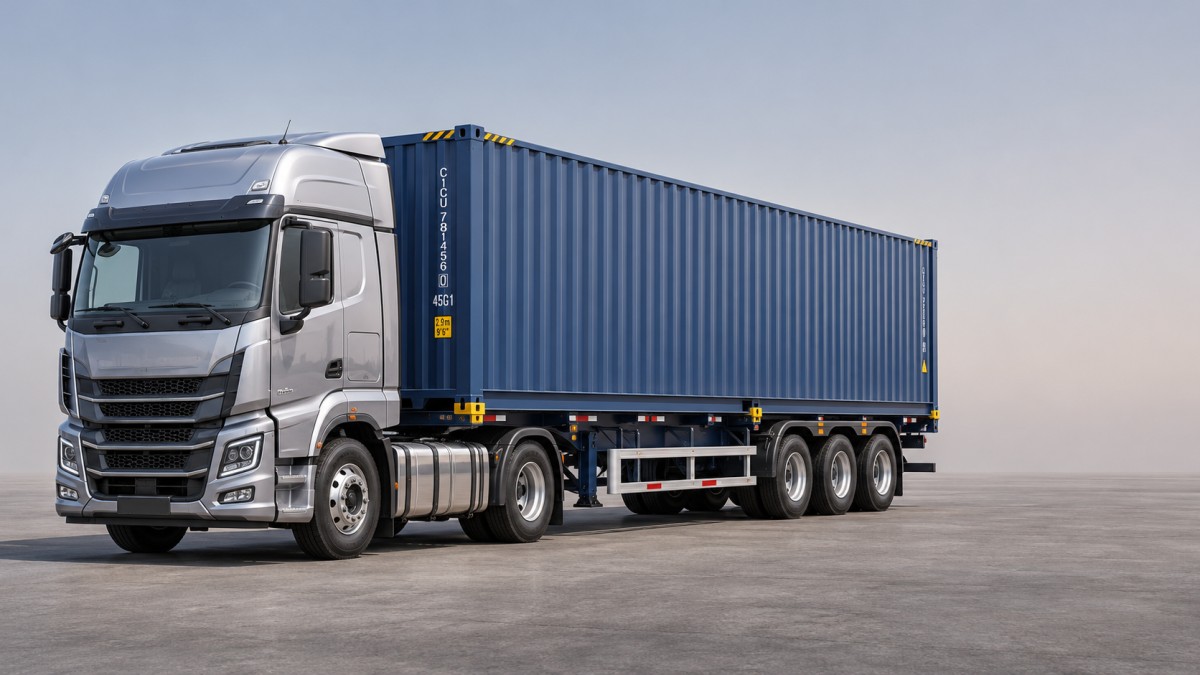
Check how the weight was removed
Two trailers can have the same rated payload and very different durability. Weight savings may come from design changes, material selection, component choices or removing equipment. The relevant question is what each change means under the intended duty cycle.
For container work, review the main beams, cross-members, suspension attachments, kingpin area and twist-lock supports. Container loads enter the chassis at defined support points; a rating based only on uniformly distributed deck loading does not necessarily describe that duty. Request the permitted container arrangements and the load assumptions behind the trailer rating.
Road conditions matter as well. Frequent travel on uneven surfaces, repeated loading cycles and concentrated loads can place different demands on a frame than steady operation on well-maintained roads. Ask what inspection and maintenance the design requires, and how damaged structural members or locking equipment can be repaired locally.
The quoted tare weight should identify what is included. Spare wheels, side guards, toolboxes, twist locks and other fittings can alter the delivered weight. A useful comparison uses the same equipment configuration and, where available, a weighbridge record for the completed trailer rather than an estimate for a bare chassis.
Rated capacity is not the same as legal freight capacity
A manufacturer’s payload rating describes a trailer capability under specified conditions; it does not override restrictions on a particular road or vehicle combination. Nor should axle ratings simply be added together and treated as the amount of goods that can legally be loaded. Part of the trailer load transfers through the kingpin, while the tractor, tyres, suspension and local axle-group rules impose their own constraints.
The distinction matters when comparing different trailer types. The 3-Axle Detachable Fence Semi Trailer, for example, is listed with a 55,000 kg rated payload and three 16-tonne axles. Its lower side boards and upper fence panels suit applications such as bagged grain, building materials and general cargo. Those figures do not establish its legal container-cargo capacity or confirm container compatibility; the deck, locking arrangement, loading conditions and destination requirements would need separate verification.
Is the lighter option worth the premium?
The answer depends on whether the operator can regularly use the saved weight. On routes where loads are consistently close to the gross limit, additional legal cargo may increase revenue or reduce the number of trips needed for a given volume. Where freight fills the container before the weight limit is reached, the same saving may deliver little payload benefit.
A simple purchase comparison should include the price difference, expected loaded trips, realistically usable extra cargo per trip and the value of that capacity. Then account for differences in maintenance, tyre and component replacement, repairability and expected service life. Treat fuel savings as a separate assessment rather than assuming that every kilogram removed produces a fixed reduction in fuel consumption.
For mixed operations, also consider utilisation. A trailer optimised for container tare weight may not be the most economical choice if it spends much of its time carrying cargo that needs side containment or a different securing arrangement. Conversely, extra fittings should not be specified merely because they are available if they add weight without serving the actual work.
What to confirm before placing an order
Provide the supplier with the intended tractor specification, container sizes and positions, expected cargo weights, route conditions and destination markets. Request a complete trailer specification, an equipment-inclusive tare weight, axle-load calculations and the assumptions used for the payload rating. Confirm twist-lock locations, coupling compatibility, braking requirements and access to replacement parts.
CHINA SINOTRUCK(HK) LIMITED Trailer, established in 2006, supplies several categories of road transport equipment and technical support to overseas customers, including markets in Africa, Southeast Asia, the Middle East and South America. For an export order, documentation should be checked against the specific trailer configuration and destination: a company’s broader certification or export history does not by itself confirm that a particular unit meets every local registration requirement.
A lighter trailer is valuable when its verified weight saving translates into usable, compliant cargo capacity without creating disproportionate maintenance or durability costs. Before selecting one, compare complete configurations and test the calculation against the actual tractor, loads and routes—not just the headline payload figure.
Related Posts
- ▶ Does a lighter flatbed container trailer increase usable payload?
- ▶ How to inspect a flatbed container trailer for frame cracks
- ▶ Is a flatbed container trailer suitable for non-container cargo?
- ▶ What causes uneven tire wear on a flatbed container trailer?
- ▶ When does a flatbed container trailer need a reinforced deck?
- ▶ How to check twist lock alignment on a flatbed container trailer
- ▶ Can a flatbed container trailer carry a 40-foot container?
- ▶ 14m 3-Axle Gooseneck Lowbed Trailer for Nigeria: Meeting Real Heavy Equipment Transport Needs
- ▶ Conquer Africa's Rugged Terrain: 14m 3-Axle Gooseneck Low Bed Trailer, the Ultimate 40-Ton Heavy Machinery Transport Solution
- ▶ Sizing a 60,000L Gooseneck Fuel Tanker for Multi-Stop Station Deliveries
CONTACT US

Established in 2006, CHINA SINOTRUCK(HK) LIMITED Trailer supplies different types of products and provides relevant technical support and services to foreign customers.
Get in Touch
*We respect your confidentiality and all information are protected.