
Since 2006
Welcome to CHINA SINOTRUCK(HK) LIMITED !










How to Choose the Right Flatbed Semi Trailer for Your Fleet?
Choosing the right flatbed semi trailer is an important decision for any transportation business. The wrong trailer configuration can limit cargo capacity, increase operating costs, and make daily transportation less efficient.
For fleet operators, logistics companies, and trailer buyers, the key is to find a trailer that matches cargo requirements, transportation conditions, and long-term business needs.
Whether you are considering a 3 axle, 4 axle, or 5 axle flatbed semi trailer, understanding a few important factors can help you make a better purchasing decision.
1. Consider the Types of Cargo You Transport
Start by identifying the main types of cargo your fleet handles.
Flatbed semi trailers are commonly used for transporting:
Steel products and metal materials
Construction materials
Timber and wood products
Industrial machinery and equipment
20ft and 40ft shipping containers
Different cargo types have different loading, securing, and transportation requirements.
For example, steel products may require chains and suitable tie-down points, while container transportation requires correctly positioned container locks.
Choosing a flatbed trailer that matches your regular cargo helps improve loading flexibility and daily operating efficiency.
2. Choose the Right Axle Configuration
Axle configuration is one of the most important factors when selecting a flatbed semi trailer.
Different axle arrangements are designed to meet different transportation requirements.
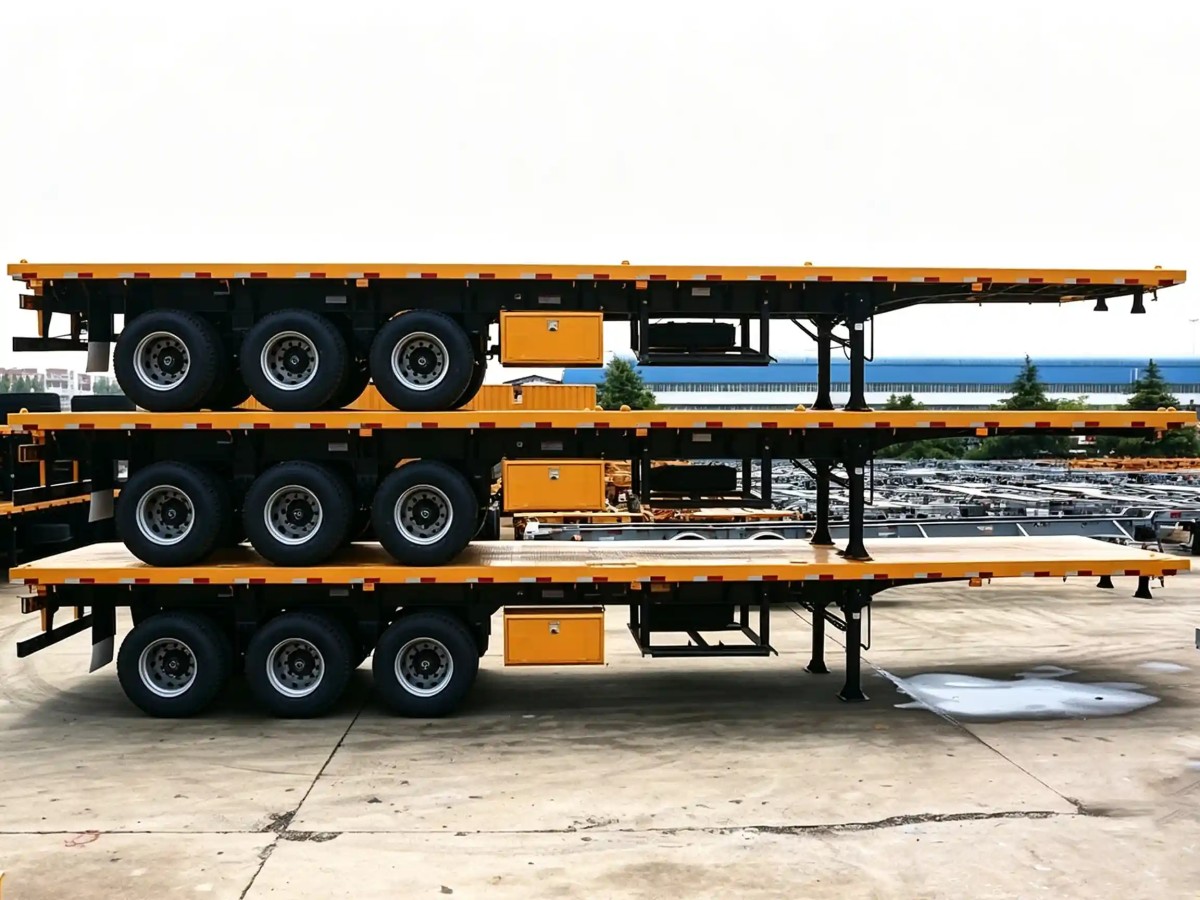
A practical choice for general cargo transportation and regular freight operations. It is suitable for businesses with conventional payload requirements.
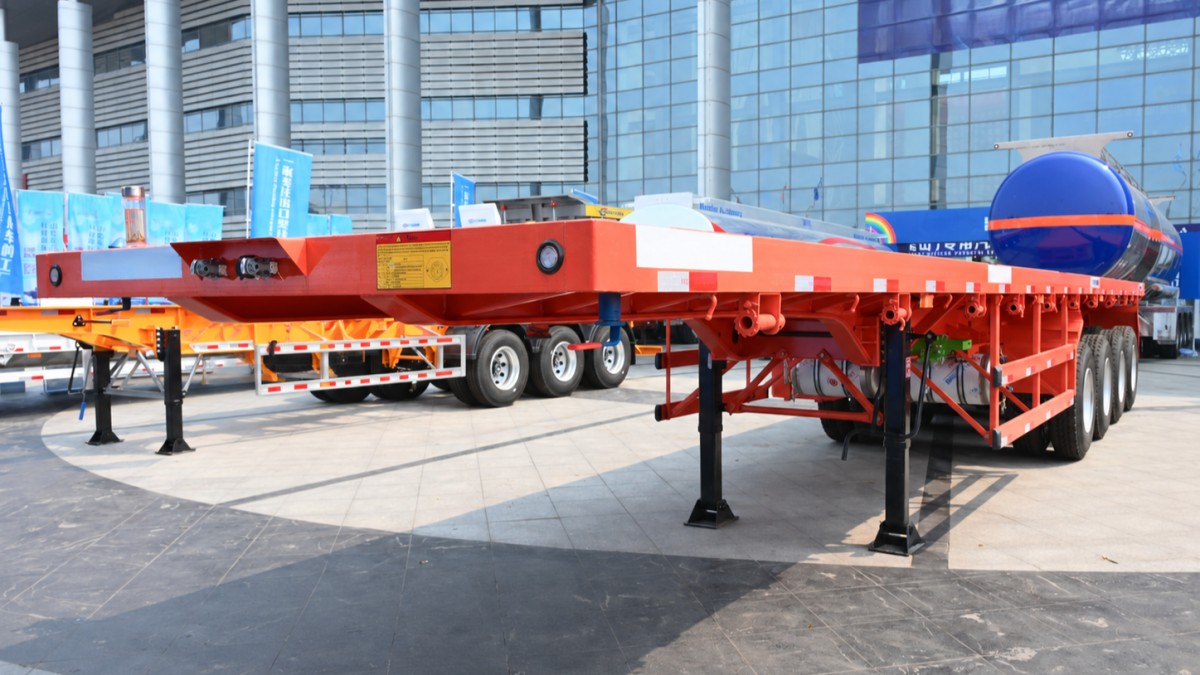
An option for transportation tasks requiring a different axle arrangement and additional axle support. It should be selected according to the required payload and applicable road regulations.
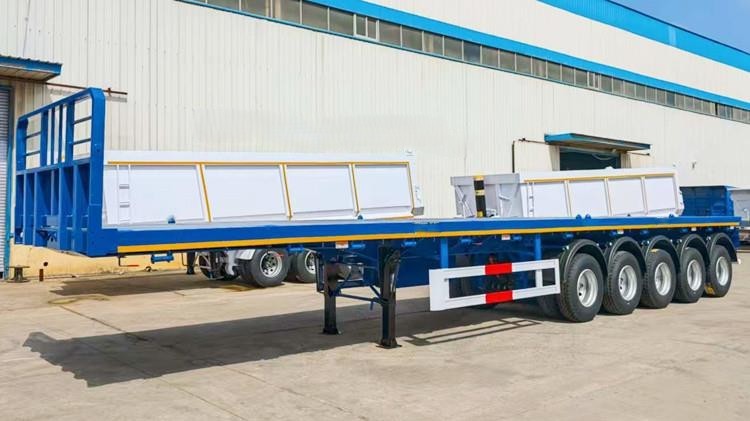
Suitable for specific transportation applications where a more extensive axle configuration is required to meet load distribution and operating requirements.
Remember that more axles do not automatically mean a higher legal payload. Actual capacity depends on axle ratings, suspension, frame design, tires, tractor compatibility, and local regulations.
3. Check the Platform Size and Loading Requirements
Platform dimensions directly affect the types of cargo a trailer can carry.
Before purchasing, consider the length, width, and loading height required for your regular cargo.
If your business mainly transports containers, make sure the platform and container locks are suitable for the intended 20ft or 40ft containers.
For steel products, timber, or machinery, consider whether the platform provides enough space for safe cargo placement and securing.
A suitable platform size helps reduce loading limitations and makes daily transportation more convenient.
4. Pay Attention to the Frame and Suspension
The frame and suspension are important components that influence a trailer's load-bearing performance and operating stability.
The main beams and cross members provide structural support, while the suspension system helps manage loads and road impacts.
For frequent heavy-duty operations, buyers should pay particular attention to frame construction, axle ratings, suspension configuration, and overall component matching.
Choosing a trailer designed for its intended working conditions can help reduce unnecessary structural stress and maintenance problems.
5. Check the Braking System, Tires, and Accessories
A reliable flatbed semi trailer requires more than a strong frame.
The braking system, tires, landing gear, and cargo securing accessories also affect daily operation.
Before purchasing, check:
Whether the braking system matches the intended operating requirements.
Whether the tires meet the required load ratings.
Whether the landing gear is suitable for the trailer's operating conditions.
Whether sufficient cargo securing points and container locks are provided when needed.
These details may seem small, but they can make a significant difference in daily transportation and maintenance.
6. Consider Your Local Road Conditions and Regulations
A trailer that works well in one market may not be suitable for another.
Road weight limits, axle load restrictions, vehicle dimensions, and transportation regulations vary between countries and regions.
Before choosing a 3 axle, 4 axle, or 5 axle flatbed semi trailer, check the local requirements for permitted gross vehicle weight, axle loads, overall dimensions, and tractor compatibility.
This helps ensure that the selected trailer is suitable for your actual transportation routes.
Final Thoughts
Choosing the right flatbed semi trailer is about matching the trailer to your business requirements, not simply selecting the largest configuration.
Consider your cargo types, payload requirements, platform dimensions, axle arrangement, key components, and local regulations before making a decision.
A properly selected 3 axle, 4 axle, or 5 axle flatbed semi trailer can provide a practical foundation for efficient and reliable cargo transportation.
Frequently Asked Questions
1. How Do I Choose the Right Flatbed Semi Trailer?
Consider your cargo type, required payload, platform dimensions, axle configuration, road conditions, and local transportation regulations. These factors help determine which trailer best suits your business.
2. What Is the Difference Between 3 Axle, 4 Axle, and 5 Axle Flatbed Trailers?
The main difference is the axle arrangement and its load distribution capability. Each configuration serves different transportation requirements. The suitable option depends on the trailer design, axle ratings, payload, and local regulations.
3. What Cargo Can a Flatbed Semi Trailer Carry?
A flatbed semi trailer can transport steel products, timber, construction materials, industrial machinery, shipping containers, and other suitable general or heavy cargo.
4. Can a Flatbed Semi Trailer Carry 20ft and 40ft Containers?
Yes. A suitably designed flatbed semi trailer can transport 20ft and 40ft containers. Buyers should check platform dimensions, container lock positions, and permitted loading weight.
5. What Should I Check Before Buying a Flatbed Semi Trailer?
Check the frame structure, axle configuration, suspension, braking system, tire ratings, landing gear, platform dimensions, and cargo securing equipment. Also confirm that the trailer meets local road regulations.
6. Does More Axles Mean Higher Load Capacity?
Not necessarily. More axles can provide additional load distribution options, but actual permitted capacity also depends on axle ratings, frame design, suspension, tires, and local regulations.
7. Is a 3 Axle or 4 Axle Flatbed Semi Trailer Better?
Neither is universally better. A 3 axle trailer may suit regular cargo operations, while a 4 axle configuration may be more appropriate for certain load distribution requirements. The right choice depends on your cargo, payload, and operating conditions.
Related Posts
- ▶ How to Choose the Right Flatbed Semi Trailer for Your Fleet?
- ▶ Flatbed Semi Trailer: 5 Common Transportation Problems and Their Solutions
- ▶ Double Deck Car Carrier Trailer: Improve Vehicle Transport Efficiency and Reduce Costs
- ▶ What tie-down capacity does a 3 axle flatbed trailer need?
- ▶ How does axle spacing affect a 3 axle flatbed trailer's load limit?
- ▶ When is a 3 axle flatbed trailer better than a 2 axle model?
- ▶ How to distribute a concentrated load on a 3 axle flatbed trailer
- ▶ What determines the unladen weight of a 45ft skeletal trailer?
- ▶ How does a sliding axle affect 45ft skeletal trailer use?
- ▶ How to identify a worn twist lock on a 45ft skeletal trailer
CONTACT US

Established in 2006, CHINA SINOTRUCK(HK) LIMITED Trailer supplies different types of products and provides relevant technical support and services to foreign customers.
Get in Touch
*We respect your confidentiality and all information are protected.