
Since 2006
Welcome to CHINA SINOTRUCK(HK) LIMITED !










What cargo is suited to a 4-axle fence semi trailer?
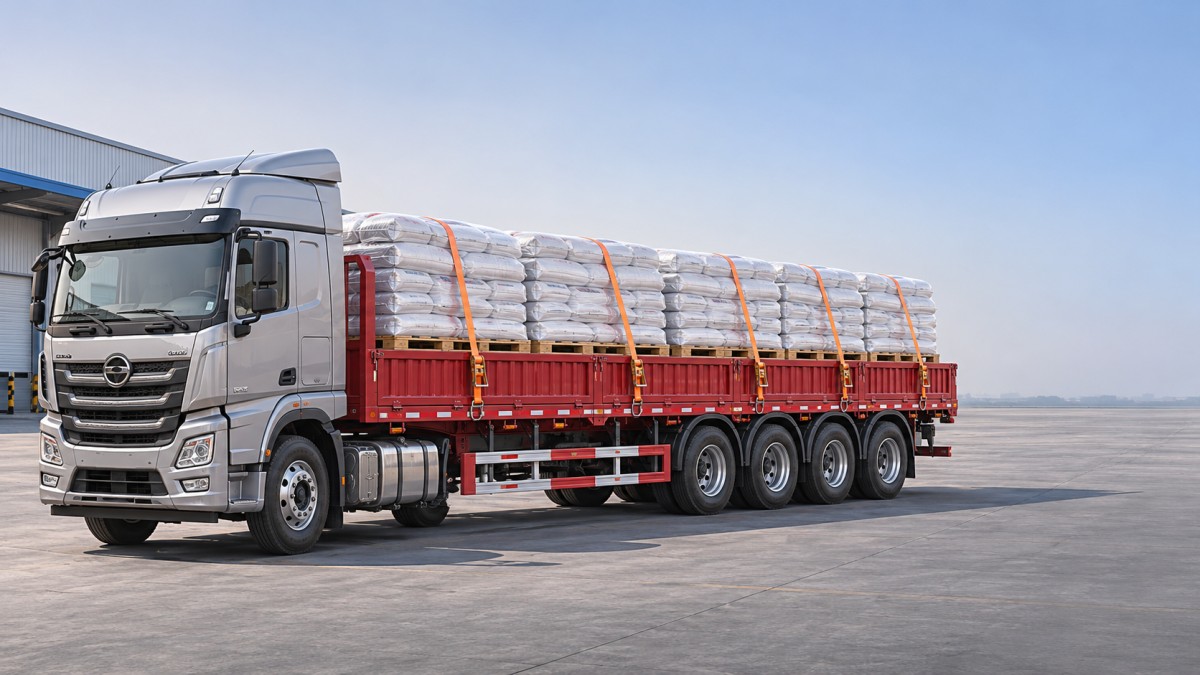
A 4-Axle Fence Semi Trailer is suited to cargo that can sit on a flat deck, be restrained against movement, and benefit from side support. Common examples include bagged grain, timber, steel sections, construction materials, and palletized goods. The four-axle layout can support substantial loads, but the usable payload depends on the trailer’s ratings, the tractor, weight distribution, and the limits along the intended route.
The fence is only one part of the load arrangement. Its height, strength, spacing, and method of opening affect which goods fit and how they can be loaded. Straps, chains, blocking, and suitable packaging remain necessary to keep cargo secure during braking, cornering, and travel over uneven roads.
Bagged agricultural goods and palletized freight
Bagged grain, flour, fertilizer, and similar products are practical loads when the bags are intact and stacked in stable layers. The fence helps contain the outer rows, while the flat deck accommodates pallets or other load bases. A cover may be needed to protect the goods from rain, dust, or contamination; the open fence itself does not provide weatherproofing.
Bag condition matters. Torn or slippery bags can shift within a stack even when the outside appears secure. Interlocking the layers where the packaging permits, filling substantial gaps, and restraining the stack as a unit reduce the chance of movement. Avoid building the load so high that it becomes unstable or exceeds the route’s permitted overall height.
Palletized machinery parts, packaged consumer goods, and other boxed freight also fit when the pallets are sound and their weight is spread across the deck. A fence with removable or opening side sections can make forklift loading easier. Before loading, compare the forklift access width and lifting height with the actual trailer and the available space at both ends of the journey.
Timber, steel, and construction materials
Timber bundles and long steel sections suit a fence trailer when their length fits within the permitted loading envelope and the load can be supported along its length. Place suitable dunnage beneath bundles to create a stable bearing surface and leave space for lifting equipment. Align the bundles so that they do not roll or slide against one another, then secure them to rated anchorage points.
Long loads create a different problem from bags: a small number of heavy bundles can concentrate weight on a limited part of the deck. A trailer may have enough total payload capacity while a particular loading pattern exceeds a local floor or frame limit. The load plan must account for the weight on each support area as well as the distribution between the tractor and trailer axles.
Steel needs special attention because it is dense and often has sharp edges. Use edge protection where straps contact steel, and select restraints suitable for the cargo weight and the restraint system. Round sections, pipes, and other items that can roll require effective cradles, chocks, or other purpose-designed restraint. A fence rail alone should not be assumed to resist the forces from a moving bundle.
Bricks, packaged tiles, and bundled building supplies can be carried when their packaging holds together and the deck supports the load. Dense materials reach the weight limit before the deck looks full. Loose bricks or irregular rubble, however, need proper containment; gaps in a fence body make them poor candidates unless suitable bins or other containment are used.
When the cargo needs a different body
Loose grain is not automatically suitable just because bagged grain is. Kernels can escape through openings, and their pressure against the sides differs from that of stable bags. A liner or grain-tight body must be designed for the material and the loading arrangement; a tarpaulin laid against the fence should not be assumed to provide adequate containment.
Liquids also require a dedicated tank rather than an open deck. For example, the 3-Axle 45000L Oil Tanker Trailer is configured for fuel transport, with a 45,000-liter tank divided into five compartments. Its purpose illustrates the distinction between packaged cargo supported on a deck and bulk liquid carried inside a tank.
Cargo that must remain sealed from weather or dust throughout the trip may be better suited to an enclosed van body. A cover on a fence trailer provides useful protection for some loads, but it does not necessarily give the same enclosure or security as a closed body.
Weight distribution determines whether a load fits
Four axles do not guarantee that any heavy cargo can be carried legally or safely. Start with the actual cargo weight, including pallets, dunnage, covers, and securing equipment. Compare the resulting loaded vehicle weight with the ratings of the trailer and tractor, then consider the axle-group loads and applicable limits on the route.
Where the weight sits matters as much as the total. Too much weight toward the front can overload the tractor’s drive axles or the coupling; too much toward the rear can overload the trailer axle group and reduce the weight carried at the coupling. Heavy individual items should be positioned using the vehicle’s loading guidance, with axle weights verified on a suitable scale when the distribution is uncertain.
Available deck length is another constraint. A load that fits between the front and rear of the trailer may still obstruct a gate, interfere with the cover, or leave no room for restraints. Any overhang must be assessed against the applicable route requirements and the trailer’s design; it also changes how the load is supported and secured.
Match the fence to the loading method
Fence trailers vary in side construction. Fixed rails provide continuous side structure but can restrict forklift access. Opening or removable sections offer more access, provided they are correctly refitted and locked before travel. Confirm the usable opening rather than relying on the overall deck dimensions: posts, hinges, and latches can reduce the space available for a pallet or bundle.
For crane loading, lifting points and overhead clearance matter, as does the strength of the packaging when lifted. For side loading, the forklift must reach the intended position without pushing goods across the deck or damaging the fence. Arrange the unloading sequence before departure when several drops are involved; freight needed first should remain accessible without disturbing the rest of the load.
Finally, inspect the fence panels, latches, deck, and rated tie-down points before use. Damaged fittings can change which cargo is suitable even when the trailer’s nominal capacity appears sufficient. After the load has settled during the journey, inspect the restraints at a safe stopping place and retension them as needed.
Related Posts
- ▶ How to Choose the Right Flatbed Semi Trailer for Your Fleet?
- ▶ Flatbed Semi Trailer: 5 Common Transportation Problems and Their Solutions
- ▶ Double Deck Car Carrier Trailer: Improve Vehicle Transport Efficiency and Reduce Costs
- ▶ What cargo is suited to a 4-axle fence semi trailer?
- ▶ How do tire replacement costs affect a 3 axle flatbed trailer?
- ▶ What tie-down capacity does a 3 axle flatbed trailer need?
- ▶ How does axle spacing affect a 3 axle flatbed trailer's load limit?
- ▶ When is a 3 axle flatbed trailer better than a 2 axle model?
- ▶ How to distribute a concentrated load on a 3 axle flatbed trailer
- ▶ What determines the unladen weight of a 45ft skeletal trailer?
CONTACT US

Established in 2006, CHINA SINOTRUCK(HK) LIMITED Trailer supplies different types of products and provides relevant technical support and services to foreign customers.
Get in Touch
*We respect your confidentiality and all information are protected.