
Since 2006
Welcome to CHINA SINOTRUCK(HK) LIMITED !










Extendable Low Bed Trailer Buying Guide – What to Look for Before You Spend
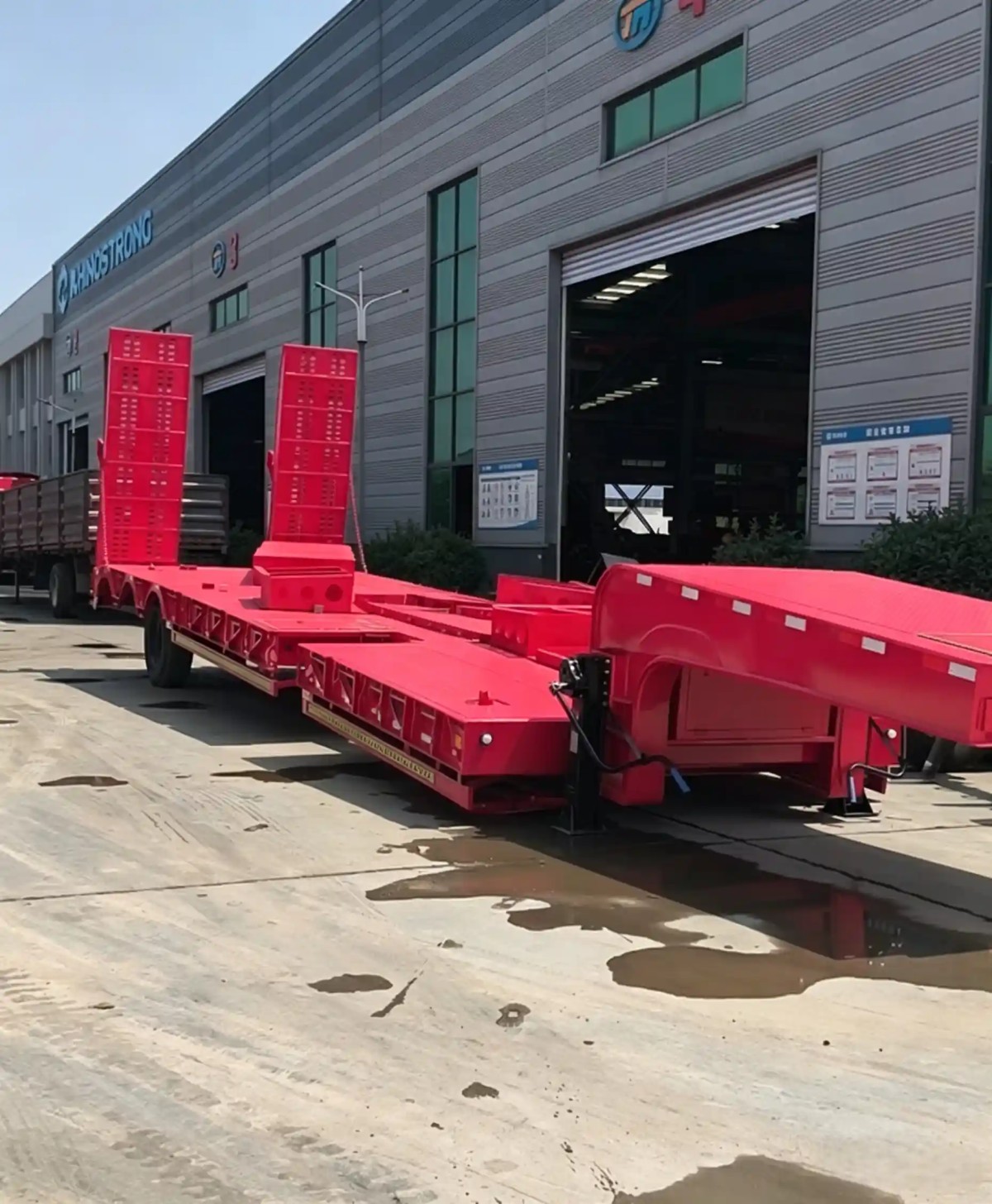
For project logistics, wind transport, and large steel structure haulers, low bed semi trailers are the go-to equipment. Standard lowbeds have fixed frames – too long for short loads, too short for long ones. The extendable lowbed solves this – the frame slides in and out, fitting both short and long cargo. One trailer does the work of several.
The most common configuration is the 3 Axles Extendable Low Bed Trailer – three axles, 40 to 50 tons gross weight, covering most project logistics and wind transport needs with the best value for money.
But with more moving parts comes more to check when buying. Let's break down the key points.
1. What problem does an extendable lowbed solve?
A standard lowbed has a fixed frame. Short cargo leaves empty space. Long cargo doesn't fit.
The extendable lowbed has two frame sections that slide together. Need extra length? Release the lock, slide the rear section back, lock it again. Normal length is around 12.5 meters. Extended, it can reach 18.5 meters or more.
After unloading, shorten it – easier to turn and park. One trailer covers multiple uses.
2. Which applications suit an extendable lowbed?
✅ Good for:
Wind project transport (blades, towers)
Large steel structures and bridge components
Extra-long pipes and steel piles
Mixed cargo with varying lengths
❌ Not recommended:
Fixed short-haul only (standard lowbed is cheaper)
Constantly working in tight spaces (extended trailers turn wide)
3. Key buying points – focus on these
① Extension length – how far does it go?
Extension length is how far the frame pulls out. Common: 6m, 8m, 10m, or more.
Choice depends on cargo – wind blades need 8-10m, steel pipes 6-8m, steel structures vary. Measure your longest regular cargo and add 1-2m margin. The 3 Axles Extendable Low Bed Trailer typically offers 6 to 10 meters of extension.
② Axle count and capacity – match the weight
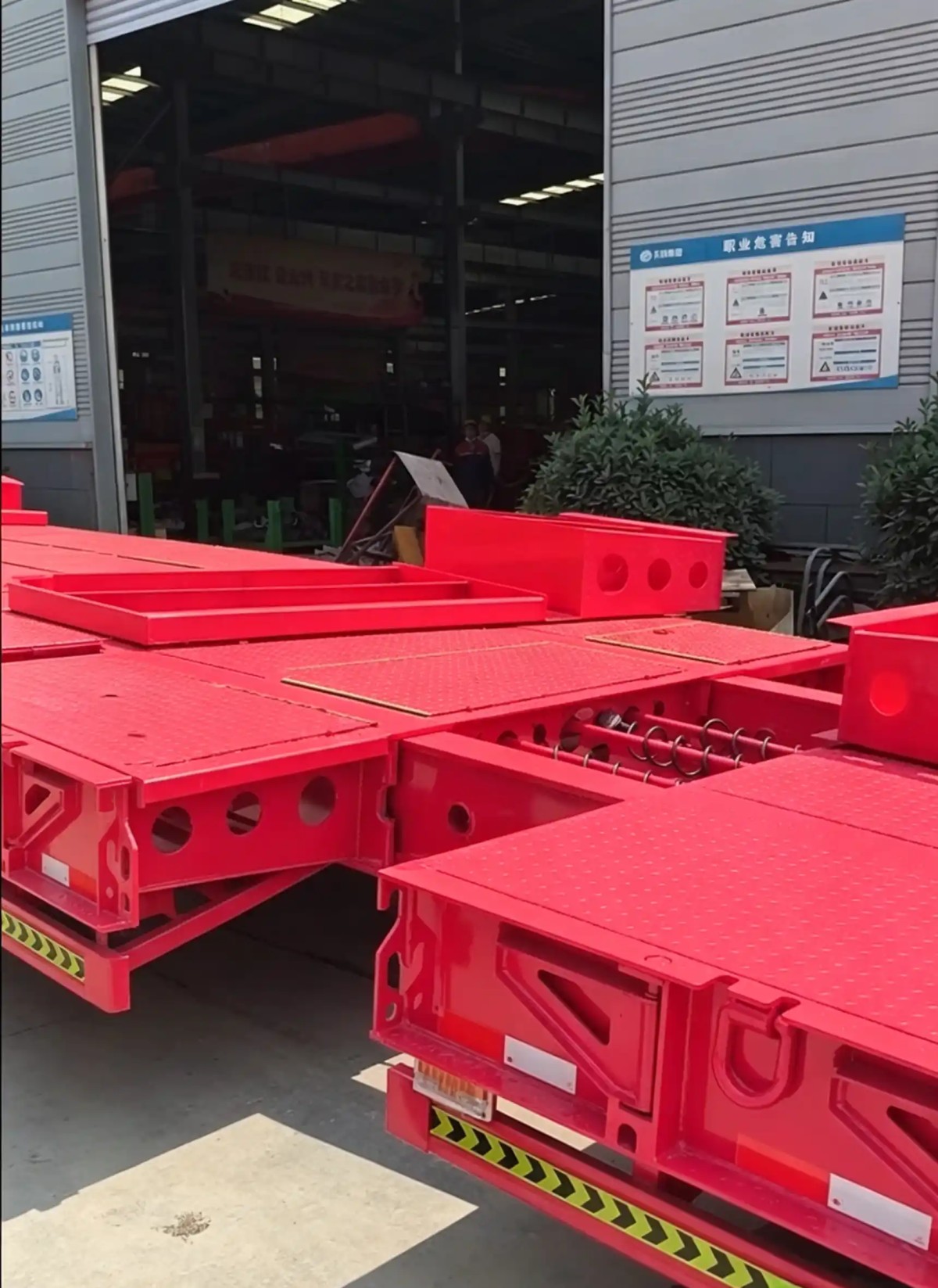
The 3 Axles Extendable Low Bed Trailer is the most common – 40-50 tons, covering most needs. 2-axle: 25-35 tons – light to medium equipment. 4-axle or more: 60-80 tons+ – ultra-heavy equipment.
More axles mean wider turning. Heavy loads – add axles.
③ Extension mechanism – hydraulic or mechanical?
Hydraulic: powered by cylinders – easy, fast, one-person operation. But more components – higher maintenance.
Mechanical: manual pins and pulling – cheaper, simpler, rugged. But takes 2-3 people and more time.
Daily extension – go hydraulic. Occasional long loads – mechanical is fine.
④ Locking mechanism – if it doesn't lock, it doesn't work
Locking pins hold the frame in place. Pins must be thick and hard – no play when inserted.
Shake it during inspection. Any movement – walk away. Play means the frame shifts while running, wearing the holes larger over time.
⑤ Guide blocks – smooth extension depends on them
The inner beam slides inside the outer beam – guide blocks make it smooth. Poor material means sticking and fast wear.
Ask about material – copper alloy or wear-resistant nylon. Thickness matters too – too thin and they wear out in months.
4. Critical details to watch
① Welds and reinforcements
Extendable frames have concentrated stress points. Ask about weld process – submerged-arc welding is more reliable than manual. Check reinforcements, especially near extension joints.
② Rust protection
Inner and outer beams rub – paint wears off and rust starts. Rust makes extension rough and accelerates guide block wear.
Ask if the inner beam has rust protection – galvanizing or special coating. No coating – it'll seize in a few years.
③ Brake lines and electrical cables
When the frame extends, lines and cables must extend too. Confirm there's enough slack and routing won't pinch or chafe.
Inside the beam is safer than outside.
5. Final checks before buying
Regulations: Extended length may exceed legal limits. Check your routes.
Tractor match: Long loads shift the center of gravity. Check your tractor's power and fifth wheel capacity.
Loading area: Extended trailers turn wide. Tight spaces may not work.
After-sales: Extension parts are more complex – ask which ones wear out and lead time for spares.
Bottom line – the 3 Axles Extendable Low Bed Trailer is the most common configuration, covering most project logistics and wind transport needs. Extension length, axle count, extension mechanism, locking mechanism, guide blocks – get these right, and you're good. If your cargo is special, length, capacity, axles, hydraulics – all can be customized. The key is knowing what you carry and where you run, then telling your supplier exactly what you need.
If you have specific questions about extendable lowbed trailer configuration, feel free to leave a comment.
Related Posts
CONTACT US

Established in 2006, CHINA SINOTRUCK(HK) LIMITED Trailer supplies different types of products and provides relevant technical support and services to foreign customers.
Get in Touch
*We respect your confidentiality and all information are protected.