
Since 2006
Welcome to CHINA SINOTRUCK(HK) LIMITED !










Dump Semi Trailer Buying Guide – What to Look for Before You Spend
Dump semi trailers are different from standard cargo trailers – they unload themselves. The hydraulic cylinders lift the body, and sand and gravel flow out on their own. No shoveling needed. But with the hydraulic system comes more to check when buying – discharge type, body structure, hydraulics, axle count.
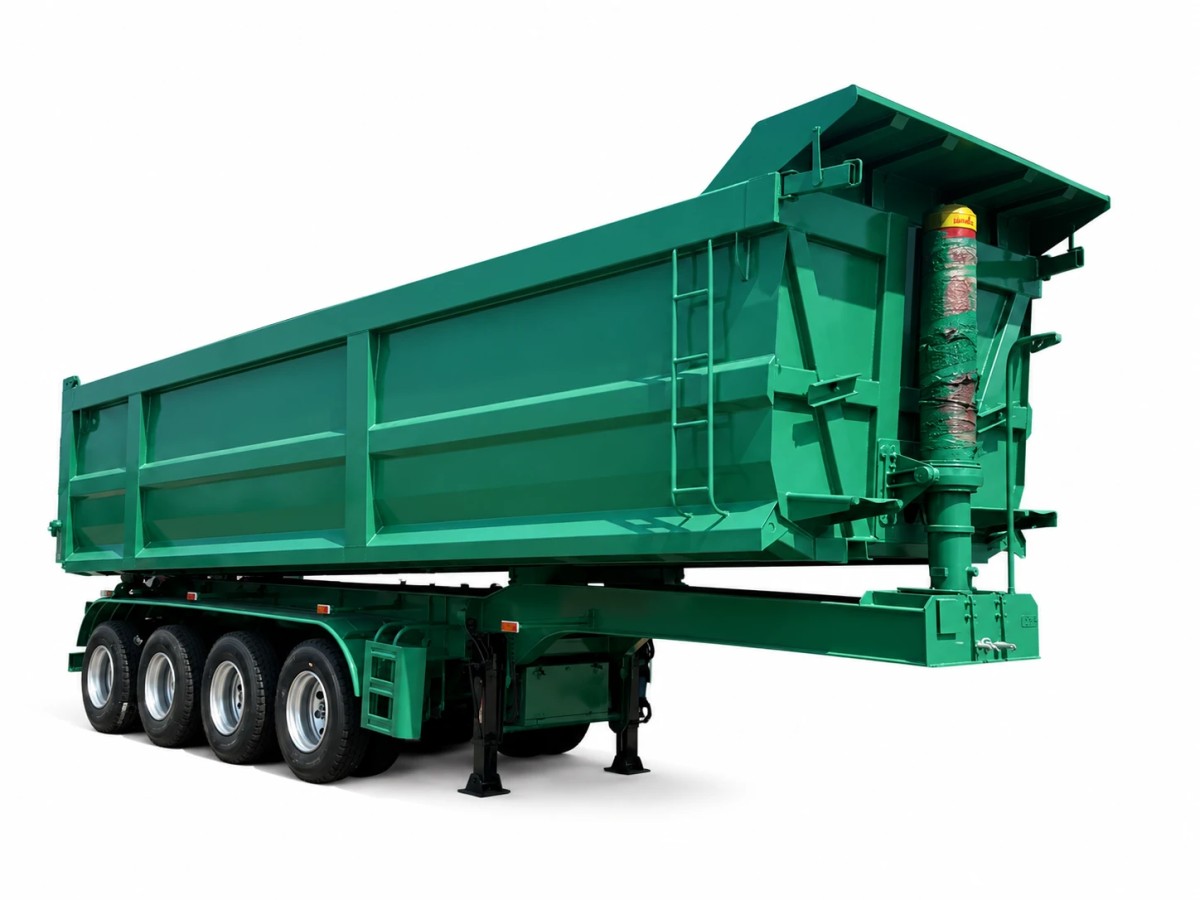
Common configurations fall into two main categories – rear tipping and side tipping. Rear tipping is the most common, tilting the body backward. Side tipping tilts to the side – good for tight spaces. Our available models include the 4-Axle Rear Dump Semi Trailer, 3-Axle Rear Dump Semi Trailer, and 3‑Axle Side‑Tipping Dump Semi‑trailer– covering both discharge types with different axle counts. Let's break it down.
1. Discharge Type – Rear Tipping or Side Tipping
This is the first decision.
✅ Rear Tipping: The body tilts backward, cargo flows out the rear. Most common – works on construction sites, mines, farms, municipal work. Needs clear space behind. Tipping angle usually 45°-60°. The 4-Axle Rear Dump Semi Trailer and 3-Axle Rear Dump Semi Trailer are both rear-tipping – 4-axle for heavy loads, 3-axle is the most common 40-50 ton configuration.
✅ Side Tipping: The body tilts to the side. Better for tight spaces – narrow sites, alleys, next to buildings. But more risk of rollover – needs level ground. The 3‑Axle Side‑Tipping Dump Semi‑trailer is a side-tipping unit for confined unloading sites.
Choose based on your unloading site – open space means rear tipping, tight space means side tipping.
2. Body Material and Structure – Match Material to Cargo
Dump trailers carry sand, gravel, ore, coal, demolition waste – the body takes a beating.
✅ Body Shape: U-shaped body has no dead corners – wet clay and sticky materials don't stick, lower center of gravity, better impact resistance. Rectangular body has higher volume utilization, flat interior – good for dry materials, grain, fly ash.
✅ Steel Selection: T700/T750 high-strength steel for lightweight standard loads. Q345 manganese plate is the most versatile and cost-effective. NM450/NM500 wear-resistant steel for mining and heavy abrasive loads – lasts 50% longer but costs more.
Thickness Reference: Standard load bottom 6mm, side 4-5mm; heavy-duty bottom 8mm, side 5mm; mining extreme heavy-duty bottom 10mm, side 6-8mm.
3. Axle Count and Capacity – Match Weight to Axles
✅ 3-axle (both 3-Axle Rear Dump Semi Trailer and 3‑Axle Side‑Tipping Dump Semi‑trailer): The most common configuration – 40-50 tons, covers most sand, gravel, coal, and debris transport.
✅ 4-axle (4-Axle Rear Dump Semi Trailer): 60-80 tons – heavy loads, mining, large earthworks. More stable, higher capacity, but heavier and uses more fuel.
4. Hydraulic System – Reliability Is Everything
The hydraulic system is the "heart" of a dump trailer – without it, you can't unload.
✅ Lifting Cylinders: Standard 13m trailers usually use 6 x 110mm lift cylinders and 1 x 130mm displacement cylinder. Premium brands are more reliable – don't cut corners here.
✅ Hydraulic Base and Lines: Base bolts matter – loose or broken bolts cause cylinder detachment and rollover.
5. Suspension and Frame – Built for Rough Roads
Dump trailers run on rough roads – suspension and frame need to be tough.
✅ Suspension Type: Mechanical suspension (leaf spring) is cheaper and simpler to repair – good for job sites and mines. Air suspension is smoother but costs more to maintain. For dump trailers, mechanical suspension is the mainstream choice.
✅ Critical Stress Points: Subframe, diagonal supports, suspension brackets – these take the most stress and crack most often. Ask about reinforcement at these points.
6. Final Checks Before Buying
Local regulations: Different limits on gross weight, axle load, length. Check before deciding.
Tractor match: Confirm kingpin size, brake lines, electrical connectors fit your tractor.
Hydraulic maintenance: Oil changes and hose inspections. Ask about hydraulic component brands and spare parts lead time.
Bottom line – the 3-Axle Rear Dump Semi Trailer is the most common configuration, covering most dump transport needs. The 4-Axle Rear Dump Semi Trailer handles heavier loads for mining and large earthworks. The 3‑Axle Side‑Tipping Dump Semi‑trailer works in tight spaces where rear tipping won't fit. Discharge type, body material, axle count, hydraulic system – get these right, and you won't buy wrong.
If you have specific questions about dump semi trailer configuration, feel free to leave a comment.
Related Posts
CONTACT US

Established in 2006, CHINA SINOTRUCK(HK) LIMITED Trailer supplies different types of products and provides relevant technical support and services to foreign customers.
Get in Touch
*We respect your confidentiality and all information are protected.