
Since 2006
Welcome to CHINA SINOTRUCK(HK) LIMITED !










Flatbed Semi-Trailer Daily Operation, Safe Driving & Maintenance Guide
1. Main Transportation Scenarios
Flatbed semi-trailers adapt to various cargo types with no strict limit on size and shape:
- General Cargo: Pallet goods, daily commodities, industrial parts and wholesale goods with fast loading and unloading.
- Steel & Building Materials: Steel plates, pipes, profiles and formworks, stable for heavy-load construction transportation.
- Engineering Machinery: Excavators, loaders and air compressors. The guardrail-free design simplifies equipment loading and unloading.
- Oversized & Irregular Cargo: Ultra-long, ultra-wide and special-shaped goods, as well as bulk materials, with fewer restrictions than enclosed trailers.
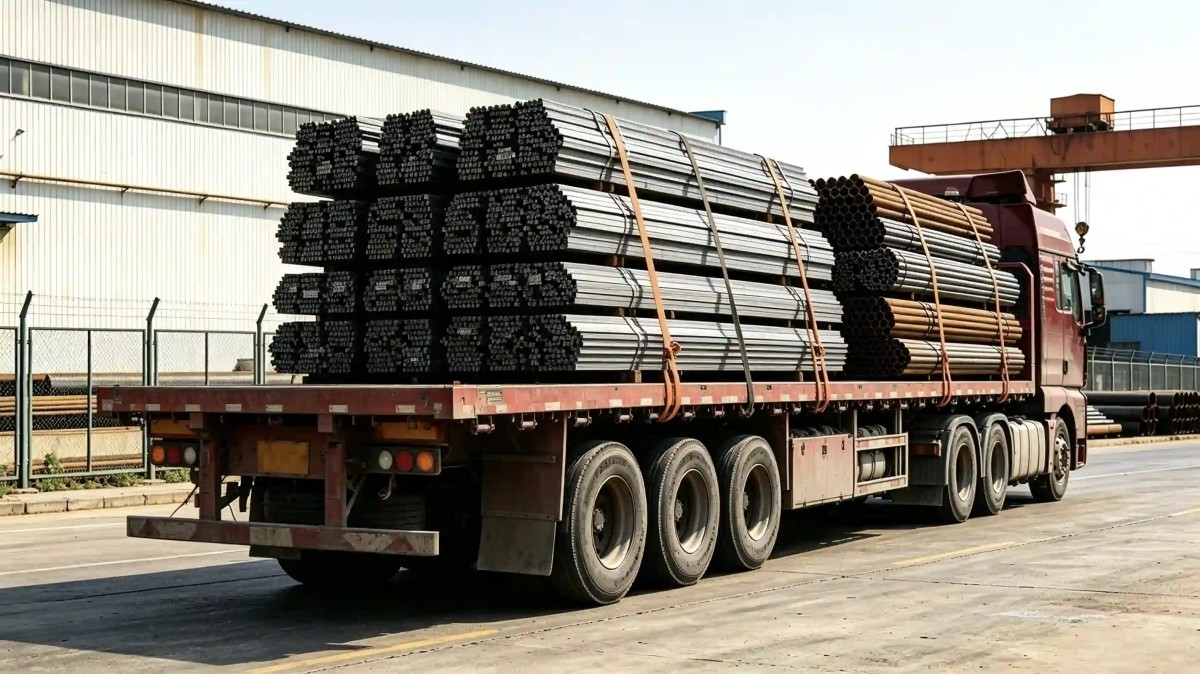
2. Standard Loading Rules for Safety
Most trailer rollover, tail flicking and cargo falling accidents are caused by non-standard loading rather than poor driving skills. Standard loading is the core of safe transportation.
4. No overloading: Overloading violates traffic rules, bends the main beam, accelerates tire wear, damages the brake and suspension system, and greatly extends braking distance.
3. Safe Driving Skills
Stable high-speed driving: Heavy-loaded trailers have poor stability. Keep constant speed, avoid speeding and frequent lane changes to prevent body shaking and runaway.
4. Daily Pre-trip & Post-trip Inspection
- Tire check: Keep standard tire pressure, no cracks or bulges. Clean stone debris and fasten bolts to prevent burst tires under heavy load.
- Brake check: Ensure sufficient air pressure, smooth brake return, no air leakage and abnormal noise.
- Connection check: Confirm traction pin and locking mechanism are fully locked, with intact and tension-free connecting pipelines.
- Chassis & outrigger check: Ensure normal outrigger lifting without deformation and oil leakage; no cracks or looseness on the main beam and suspension.
Light & reflector check: Ensure normal operation of all lights and complete reflective strips for night driving safety.
5. Daily Maintenance to Extend Service Life
- Regularly grease rotating shafts, brake movable parts and suspension joints for flexible operation and low wear.
- Clean chassis sediment and water after rainy and muddy driving to prevent rust and corrosion.
- Park on flat ground with no load for long-term storage, avoid unilateral pressure and platform deformation.
- Clean tire gaps regularly, check wear condition and replace aging tires in time.
6. Common Dangerous Mistakes for New Drivers
Bad driving habits are the main cause of accidents and vehicle damage. Avoid the following operations:
- Unbalanced unilateral loading leading to rollover risk;
- Sudden braking and sharp steering causing inertial runaway and tail flicking;
- Driving with unfixed cargo, leading to random sliding and gravity change;
- Driving with abnormal tire pressure and damaged tires, easily causing burst tires;
- Long-term continuous downhill braking leading to brake thermal decay and failure.
7. Summary
Although flatbed semi-trailers are sturdy and simple in structure, driving safety and service life depend on standardized loading, stable driving and careful daily maintenance. Standard operation and regular inspection can avoid safety accidents, reduce fault rates and operating costs, making the trailer more fuel-efficient, durable and cost-effective for long-term freight work.
Related Posts
CONTACT US

Established in 2006, CHINA SINOTRUCK(HK) LIMITED Trailer supplies different types of products and provides relevant technical support and services to foreign customers.
Get in Touch
*We respect your confidentiality and all information are protected.