
Since 2006
Welcome to CHINA SINOTRUCK(HK) LIMITED !










Car Carrier Semi-Trailer Buying Guide – What to Look for Before You Spend
Car carrier semi-trailers are different from standard cargo trailers – they're built specifically to transport vehicles. One trailer carries eight, ten, or more cars, stacked on two levels. But because of the specialized structure, buying considerations are different too – vehicle capacity, deck height, hydraulic system, loading method – get these right, and you won't buy wrong.
Common configurations include 2-axle and 3-axle double-deck units. Our available models – the 2 Axle Car Carrier Semi-Trailer and 3-Axle Double Deck Car Carrier Trailer – cover different capacity needs. The 2-axle is lighter and more maneuverable – good for short hauls. The 3-axle double-deck carries more – good for long-haul bulk transport. Let's break down the key points.
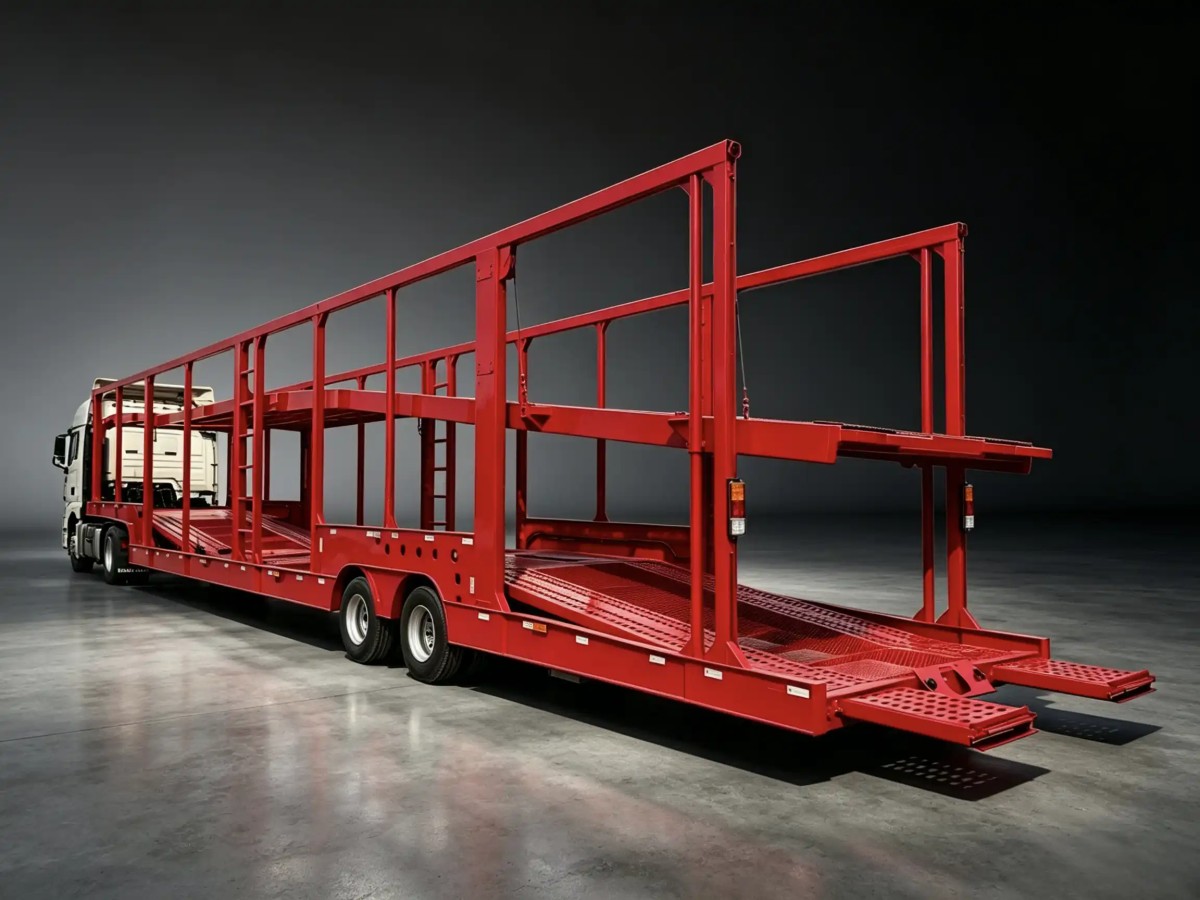
1. Vehicle Capacity – How Many Cars Decide the Size
Car carriers are measured by "slots" – how many vehicles they can carry.
✅ 2-axle (2 Axle Car Carrier Semi-Trailer): Typically 4 to 8 vehicles. Lightweight, maneuverable – good for short hauls, city delivery, dealer transfers. Tighter turning radius – easier in narrow streets.
✅ 3-axle double-deck (3-Axle Double Deck Car Carrier Trailer): Typically 8 to 12 vehicles. Double-deck design – good for long-haul bulk transport, vehicle exports, cross-province runs. More axles, more stability on highways – more capacity but heavier.
2. Deck Height and Loading Method – Low Ground Clearance Cars Depend on It
The biggest challenge for car carriers is loading low-slung sports cars or modified vehicles.
✅ Loading angle: Hydraulic lift systems adjust deck height and angle – lower angles mean easier loading for low cars. A good hydraulic system is flexible – both low cars and regular cars can load without scraping.
✅ Ramps and loading bridges: Ramp length and angle determine which cars can load. Longer ramps mean gentler angles – low cars can drive on without scraping. Ask about ramp material and weight capacity.
3. Hydraulic System – Smooth Lifting Depends on It
The upper deck lifts and lowers via hydraulics. A good hydraulic system means efficient loading.
✅ Hydraulic lift platforms: 2-axle units typically have simpler hydraulics. 3-axle double-deck units have more complex systems controlling multiple platforms. Ask about cylinder brands and seal quality – repairs aren't cheap.
✅ Hydraulic hoses and fittings: Car carrier hydraulic lines are more complex than standard trailers – hoses move with the platforms. Check for protective routing – lines shouldn't pinch or chafe during lifting.
4. Frame and Steel – Built for Tough Roads
Car carriers run long miles – the frame takes constant stress.
✅ Steel selection: High-strength steel is standard – main beams typically use Q345B or higher. For 8+ vehicles, frame rigidity and torsional strength are critical – car carriers have a high center of gravity, and frame stress on turns is significant.
✅ Corrosion protection: Car carriers work outdoors – rain and mud take their toll. Ask about coating process – shot blasting + epoxy primer + polyurethane topcoat means good protection.
5. Tie-Downs and Securing – Vehicles Must Stay in Place
Vehicles on the carrier are secured with straps. Tie-down points and straps must be reliable.
✅ Tie-down point placement: Each wheel position needs a tie-down point – adjustable points work for different wheelbases. Good carriers have adjustable tie-downs – any car fits.
✅ Straps and wheel chocks: Ask how many straps are included and their weight capacity. Enough wheel chocks – otherwise vehicles slide forward and backward on the platform.
6. Final Checks Before Buying
Regulations: Height limits are strict – Europe limits 4m, Middle East sometimes 4.2m. Check your routes before buying – hitting a bridge is not an option.
Tractor match: Car carriers carry heavy loads – 10 cars at 1.5 tons each plus trailer weight often exceeds 35 tons. Check your tractor's horsepower and fifth wheel capacity.
Loading area: Car carriers need space to load – enough straight road for platform lowering. If the loading area is tight, a 3-axle double-deck may not fit – a 2-axle unit might be better.
Bottom line – the 2 Axle Car Carrier Semi-Trailer is for short hauls and light loads. The 3-Axle Double Deck Car Carrier Trailer is for long-haul bulk transport. Vehicle capacity, deck height, hydraulic system, frame strength – get these right, and you won't buy wrong.
If you have specific questions about car carrier semi-trailer configuration, feel free to leave a comment.
Related Posts
CONTACT US

Established in 2006, CHINA SINOTRUCK(HK) LIMITED Trailer supplies different types of products and provides relevant technical support and services to foreign customers.
Get in Touch
*We respect your confidentiality and all information are protected.